Published Works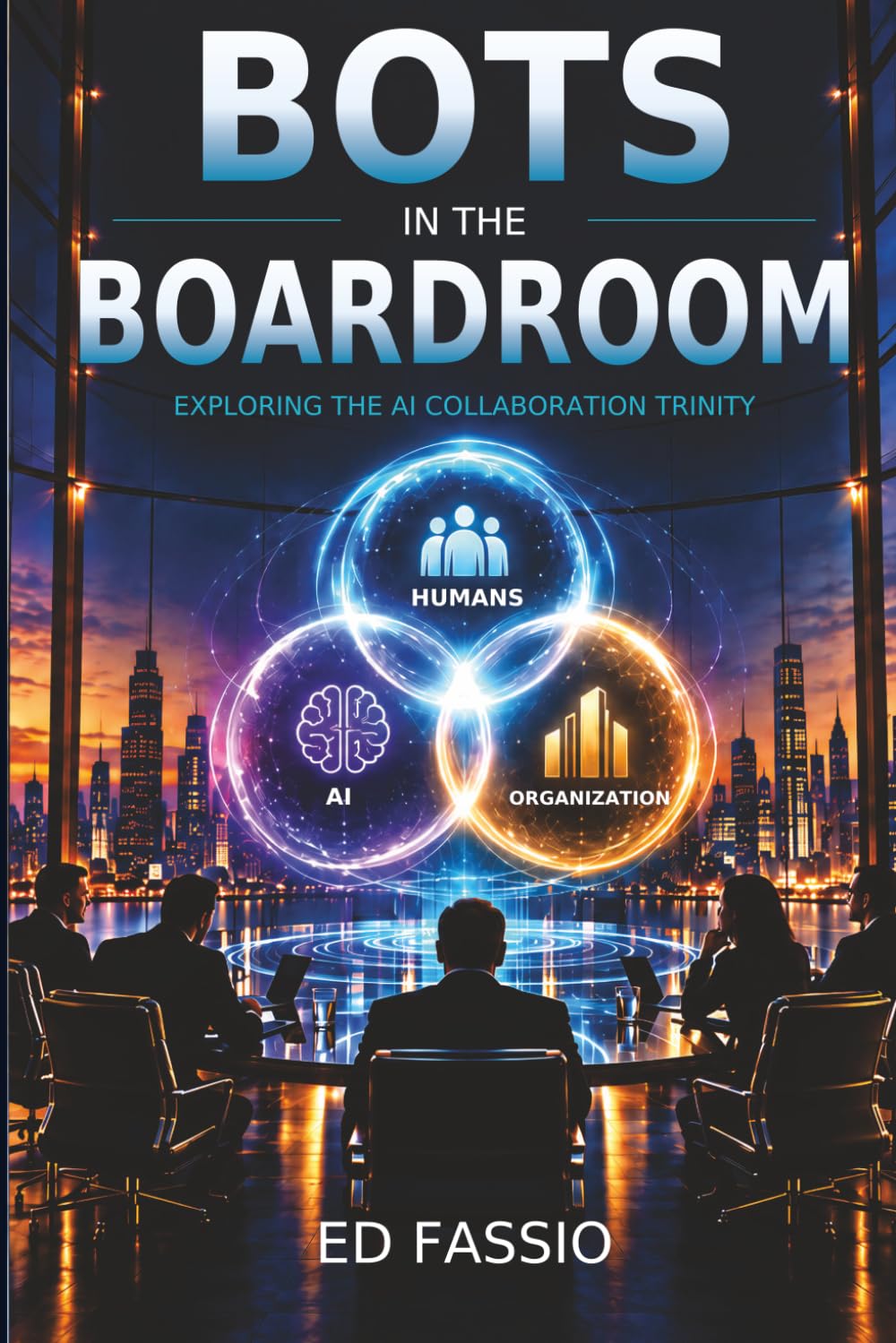
Bots in the Boardroom
Exploring the AI Collaboration Trinity
By Edward Fassio
An office full of agents. A CEO full of questions. A future that still needs a human at the table.
The bots are here. Who’s in charge?
The office is buzzing. Tasks are moving. But nobody can quite say who gave the bots permission—or who answers when something goes wrong. Making AI useful takes more than turning it on. People need clear boundaries, the confidence to work with it, and an honest way to see who benefits.
Inside the Trinity
Who decides?
Governance and accountability: define what an agent may do, where its authority stops, and which human remains accountable. Decision-level delegation and written grants make those boundaries explicit.
Who can work?
Enablement and training: give people a shared language for delegation and the capability to work confidently alongside AI. Organizational readiness and a ninety-day plan connect principles to practice.
Who benefits?
Enterprise and human value: look beyond hours saved. Two value ledgers keep outcomes for the organization and its people visible. Released capacity is not realized value.
Who this is for
For executives, boards, HR, finance, technology, risk and operations—and the teams working with AI. A starting point for setting boundaries, maintaining accountability, and connecting training with human judgment and honest value measurement.
The series connection
Part of the Agentic Frontier Series. Where The Constitution of the Frontier explores delegated authority and human accountability, Bots in the Boardroom translates those principles into organizational practice.
About the author
Edward Fassio writes about AI collaboration, delegated authority and human accountability.
Get it on Amazon